What is an AI Agent, How Does It Work, and Where Is It Used?
The cards are being reshuffled in the world of artificial intelligence. Until now, we’ve grown accustomed to “chatting” with tools like ChatGPT or Gemini—asking questions and having them generate text for us. But now, a far more capable player has entered the stage: AI Agents.
So, what truly sets an AI agent apart from a simple “chatbot”? And why have they become one of the biggest technology trends of 2026?
The cards are being reshuffled in the world of artificial intelligence. Until now, we’ve grown accustomed to “chatting” with tools like ChatGPT or Gemini—asking questions and having them generate text for us. But now, a far more capable player has entered the stage: AI Agents.
So, what truly sets an AI agent apart from a simple “chatbot”? And why have they become one of the biggest technology trends of 2026?
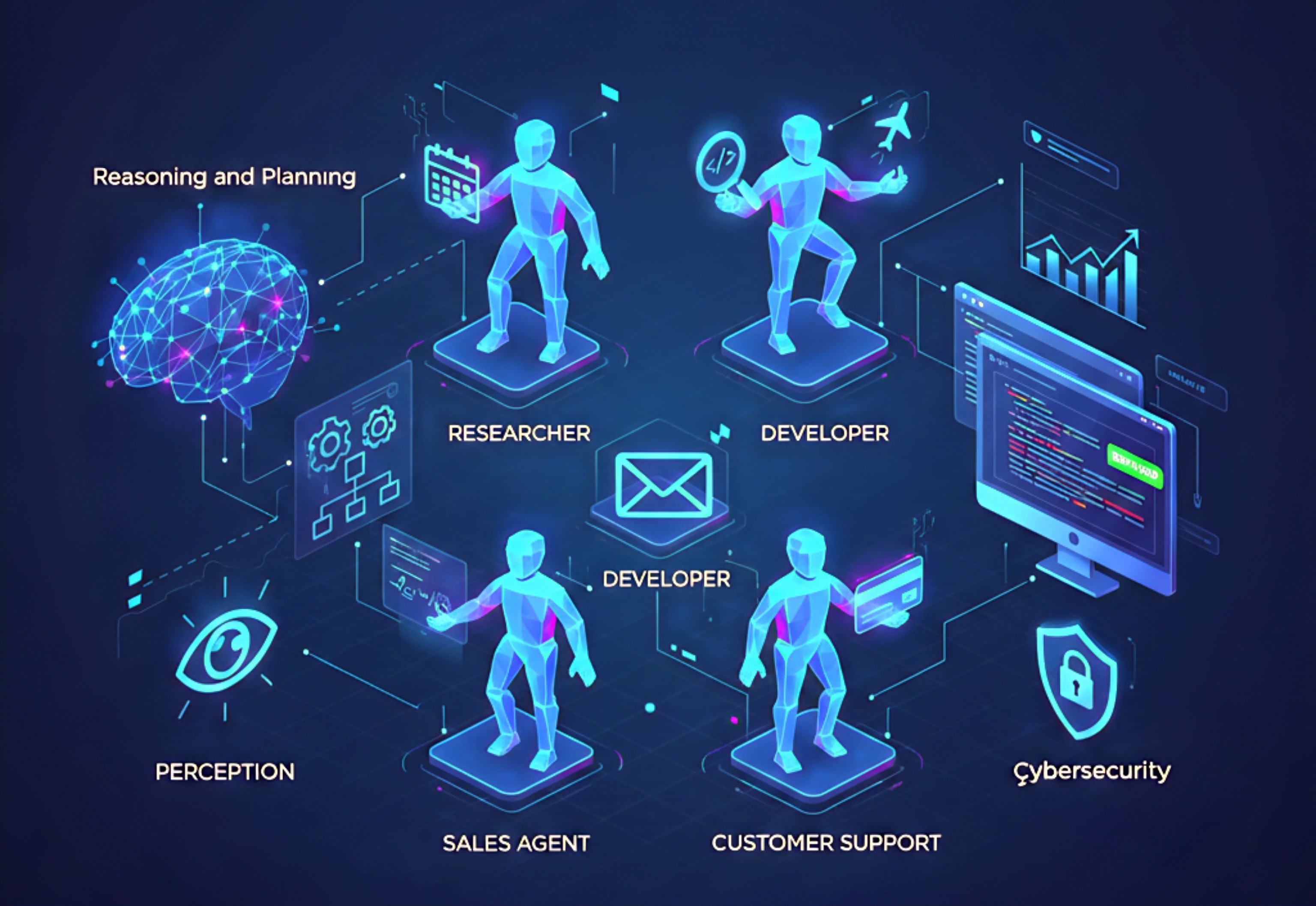
The cards are being reshuffled in the world of artificial intelligence. Until now, we’ve grown accustomed to “chatting” with tools like ChatGPT or Gemini—asking questions and having them generate text for us. But now, a far more capable player has entered the stage: AI Agents.
So, what truly sets an AI agent apart from a simple “chatbot”? And why have they become one of the biggest technology trends of 2026?
What Is an AI Agent?
An AI agent is an autonomous software system that perceives its environment, processes information, makes decisions, and takes action independently to achieve specific goals. Unlike traditional AI tools, an AI agent does not wait for constant user input—it can complete tasks without human intervention.
Let’s look at a simple example. When you ask a classic AI assistant like ChatGPT, “What’s the weather today?”, it gives you an answer and waits. An AI agent, on the other hand, automatically checks the weather when you wake up, detects rain, sends you a notification, calls a taxi, and even postpones your meeting by 15 minutes after factoring in traffic conditions.
That’s autonomous decision-making in action.
How Do AI Agents Work?
AI agents operate through a continuous loop consisting of four core stages:
1. Perception: The agent gathers information from its environment through sensors, databases, APIs, cameras, or user inputs. For example, a customer service agent can simultaneously scan incoming emails, customer history, and product inventory.
2. Reasoning: The collected data is analyzed using Large Language Models (LLMs) and machine learning algorithms. The system asks itself questions like “How should I solve this problem?” or “Which action is optimal?”, leveraging past experiences and learned patterns.
3. Decision Making: Based on the analysis, the agent determines the most appropriate action plan. During this process, it adheres to predefined business rules, legal constraints, and brand guidelines. Even under uncertainty, AI agents can make independent decisions.
4. Action: The agent executes the chosen action—making an API call, sending an email, updating a system, or coordinating with other agents. Crucially, all of this happens without human involvement.
Operational Loop:
Input → Perceive → Plan → Act → Evaluate Outcome → Learn
Types of AI Agents
AI agents can be classified based on their capabilities and operating styles:
1. Reactive Agents
They act according to predefined rules and have limited memory. Simple game bots and basic automation systems fall into this category.
2. Stateful Agents
These agents retain memory of past interactions and experiences. Customer support bots and personal assistants are common examples.
3. Proactive Agents
They anticipate user needs and act independently toward long-term objectives. These agents can take initiative and perform strategic planning.
4. Multi-Agent Systems
Complex environments where multiple AI agents collaborate toward shared goals. For instance, in an e-commerce platform, inventory management agents, pricing agents, and customer service agents can work together while operating autonomously.
Where Are AI Agents Used?
As of 2025, AI agents play critical roles across many industries:
Customer Service
They automatically handle repetitive inquiries, route complex issues efficiently, and analyze customer data in real time—reducing response times and operational burden while enabling 24/7 service.
Marketing and Sales
AI agents manage campaigns, segment audiences, optimize pricing, and identify leads using large-scale data analysis. Platforms like Salesforce Agentforce 2.0 significantly boost marketing team productivity. According to CEO Marc Benioff, this market could reach a multi-trillion-dollar scale.
Software Development
AI coding agents go beyond generating code snippets. They analyze existing codebases, refactor code, generate test cases, and provide contextual recommendations. Tools like Anthropic’s Claude Code operate directly as terminal-based coding agents.
Finance
Used for portfolio optimization, risk analysis, fraud detection, and financial forecasting. AI agents also strengthen cybersecurity through anomaly and threat detection.
Healthcare
AI agents support disease diagnosis, personalized treatment plans, medication reminders, and appointment scheduling. By analyzing health data, they can contribute to early detection.
E-commerce and Retail
They power recommendation engines, dynamic pricing, inventory optimization, and customer behavior analysis. Netflix’s content recommendations and Amazon’s product suggestions are prominent examples.
Human Resources
AI agents automate resume screening, candidate evaluation, and recruitment workflows, allowing HR teams to focus on strategic tasks.
Energy Management
By monitoring consumption in real time, AI agents significantly improve efficiency. Google reduced data center energy costs by up to 40% using AI agent systems.
Education
Personalized learning agents adapt content to individual learning styles, delivering tailored educational experiences.
Smart Cities
AI agents support traffic management, energy distribution, and public services. Experimental initiatives like Google’s Project Mariner showcase agents capable of navigating the web and completing tasks autonomously.
How Can You Build Your Own AI Agent?
AI agents are no longer exclusive to large enterprises. Individuals and small teams can build their own:
Define the Goal and Tasks: Clearly specify what you want the agent to do and which problems it should solve.
Choose the Right Platform: Tools such as Botpress, Gumloop, and Voiceflow enable agent development without requiring coding skills.
Data Collection and Training: Build high-quality and comprehensive datasets to train your agent effectively.
Testing and Continuous Improvement: Test the agent’s outputs, fix errors, and continuously optimize its performance.
Integration: Integrate your agent with your existing systems and workflows
In Summary: Why Should We Use AI Agents?
AI agents shift our relationship with technology from “we manage the software” to “the software works for us.” Transforming passive assistants into active collaborators, these systems are reshaping both business operations and everyday life.
In the coming years, we will see just how far this technology can go. But one thing is already clear: AI agents are no longer a trend—they are becoming an essential part of competitive business and modern life.
According to a PwC 2025 survey, 63% of business leaders already use AI agents in some form. Gartner predicts that by 2028, one-third of enterprise software applications will include AI agents, independently making 15% of business decisions.
What Is an AI Agent?
An AI agent is an autonomous software system that perceives its environment, processes information, makes decisions, and takes action independently to achieve specific goals. Unlike traditional AI tools, an AI agent does not wait for constant user input—it can complete tasks without human intervention.
Let’s look at a simple example. When you ask a classic AI assistant like ChatGPT, “What’s the weather today?”, it gives you an answer and waits. An AI agent, on the other hand, automatically checks the weather when you wake up, detects rain, sends you a notification, calls a taxi, and even postpones your meeting by 15 minutes after factoring in traffic conditions.
That’s autonomous decision-making in action.
How Do AI Agents Work?
AI agents operate through a continuous loop consisting of four core stages:
1. Perception
The agent gathers information from its environment through sensors, databases, APIs, cameras, or user inputs. For example, a customer service agent can simultaneously scan incoming emails, customer history, and product inventory.
2. Reasoning
The collected data is analyzed using Large Language Models (LLMs) and machine learning algorithms. The system asks itself questions like “How should I solve this problem?” or “Which action is optimal?”, leveraging past experiences and learned patterns.
3. Decision Making
Based on the analysis, the agent determines the most appropriate action plan. During this process, it adheres to predefined business rules, legal constraints, and brand guidelines. Even under uncertainty, AI agents can make independent decisions.
4. Action
The agent executes the chosen action—making an API call, sending an email, updating a system, or coordinating with other agents. Crucially, all of this happens without human involvement.
Operational Loop:
Input → Perceive → Plan → Act → Evaluate Outcome → Learn
Types of AI Agents
AI agents can be classified based on their capabilities and operating styles:
1. Reactive Agents
They act according to predefined rules and have limited memory. Simple game bots and basic automation systems fall into this category.
2. Stateful Agents
These agents retain memory of past interactions and experiences. Customer support bots and personal assistants are common examples.
3. Proactive Agents
They anticipate user needs and act independently toward long-term objectives. These agents can take initiative and perform strategic planning.
4. Multi-Agent Systems
Complex environments where multiple AI agents collaborate toward shared goals. For instance, in an e-commerce platform, inventory management agents, pricing agents, and customer service agents can work together while operating autonomously.
Where Are AI Agents Used?
As of 2025, AI agents play critical roles across many industries:
Customer Service
They automatically handle repetitive inquiries, route complex issues efficiently, and analyze customer data in real time—reducing response times and operational burden while enabling 24/7 service.
Marketing and Sales
AI agents manage campaigns, segment audiences, optimize pricing, and identify leads using large-scale data analysis. Platforms like Salesforce Agentforce 2.0 significantly boost marketing team productivity. According to CEO Marc Benioff, this market could reach a multi-trillion-dollar scale.
Software Development
AI coding agents go beyond generating code snippets. They analyze existing codebases, refactor code, generate test cases, and provide contextual recommendations. Tools like Anthropic’s Claude Code operate directly as terminal-based coding agents.
Finance
Used for portfolio optimization, risk analysis, fraud detection, and financial forecasting. AI agents also strengthen cybersecurity through anomaly and threat detection.
Healthcare
AI agents support disease diagnosis, personalized treatment plans, medication reminders, and appointment scheduling. By analyzing health data, they can contribute to early detection.
E-commerce and Retail
They power recommendation engines, dynamic pricing, inventory optimization, and customer behavior analysis. Netflix’s content recommendations and Amazon’s product suggestions are prominent examples.
Human Resources
AI agents automate resume screening, candidate evaluation, and recruitment workflows, allowing HR teams to focus on strategic tasks.
Energy Management
By monitoring consumption in real time, AI agents significantly improve efficiency. Google reduced data center energy costs by up to 40% using AI agent systems.
Education
Personalized learning agents adapt content to individual learning styles, delivering tailored educational experiences.
Smart Cities
AI agents support traffic management, energy distribution, and public services. Experimental initiatives like Google’s Project Mariner showcase agents capable of navigating the web and completing tasks autonomously.
How Can You Build Your Own AI Agent?
AI agents are no longer exclusive to large enterprises. Individuals and small teams can build their own:
Define the Goal and Tasks: Clearly specify what you want the agent to do and which problems it should solve.
Choose the Right Platform: Tools such as Botpress, Gumloop, and Voiceflow enable agent development without requiring coding skills.
Data Collection and Training: Build high-quality and comprehensive datasets to train your agent effectively.
Testing and Continuous Improvement: Test the agent’s outputs, fix errors, and continuously optimize its performance.
Integration: Integrate your agent with your existing systems and workflows
In Summary: Why Should We Use AI Agents?
AI agents shift our relationship with technology from “we manage the software” to “the software works for us.” Transforming passive assistants into active collaborators, these systems are reshaping both business operations and everyday life.
In the coming years, we will see just how far this technology can go. But one thing is already clear: AI agents are no longer a trend—they are becoming an essential part of competitive business and modern life.
According to a PwC 2025 survey, 63% of business leaders already use AI agents in some form. Gartner predicts that by 2028, one-third of enterprise software applications will include AI agents, independently making 15% of business decisions.